Your yield report shows contamination.
Your particle counter showed nothing.
What you can Count on

What you can Count on

in Electronics Manufacturing.

in Electronics Manufacturing.

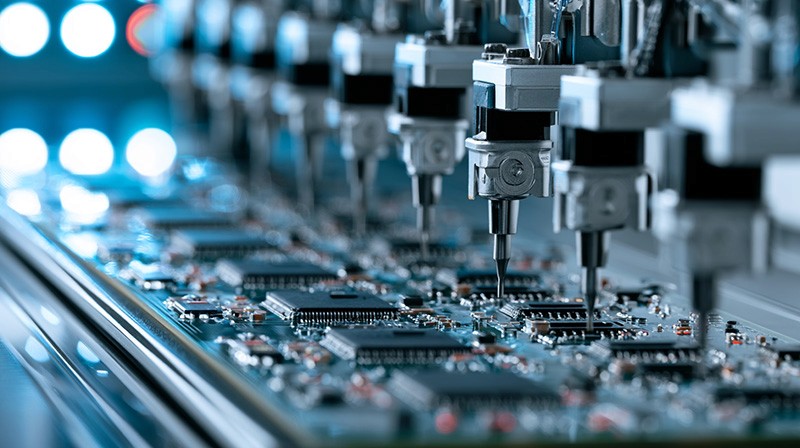
  • APMON — real-time deposition rate monitoring at the assembly location during active production, with alarm limits derived from the critical particle size and exposure conditions of the specific component being assembled.


  • SUMON — surface cleanliness measurement of pick-and-place nozzles, conveyor surfaces, inspection platforms, and handling fixtures before and after cleaning, expressed in PAC (Percentage Area Coverage) per IEST-STD-CC1246E.


  • Shift-level trend data — deposition rate and surface cleanliness logged per shift, enabling correlation of contamination events with personnel activities, process steps, and cleaning cycles.


  • Root cause acceleration — when a yield drop occurs, the APMON event log provides a timestamp and deposition magnitude for every interval during the affected production run; SUMON surveys contact surfaces to determine whether a transfer pathway contributed.


  • Cleaning program optimisation — SUMON data before and after cleaning establishes whether the cleaning method achieves the required surface cleanliness level, and whether the cleaning interval is calibrated to the actual contamination rate.


Yield loss from contamination is the most expensive problem in electronics manufacturing that is rarely measured at the source. The data exists the moment you deploy the right instrument at the right location.

  • APMON — real-time deposition rate monitoring at the assembly location during active production, with alarm limits derived from the critical particle size and exposure conditions of the specific component being assembled.


  • SUMON — surface cleanliness measurement of pick-and-place nozzles, conveyor surfaces, inspection platforms, and handling fixtures before and after cleaning, expressed in PAC (Percentage Area Coverage) per IEST-STD-CC1246E.


  • Shift-level trend data — deposition rate and surface cleanliness logged per shift, enabling correlation of contamination events with personnel activities, process steps, and cleaning cycles.


  • Root cause acceleration — when a yield drop occurs, the APMON event log provides a timestamp and deposition magnitude for every interval during the affected production run; SUMON surveys contact surfaces to determine whether a transfer pathway contributed.


  • Cleaning program optimisation — SUMON data before and after cleaning establishes whether the cleaning method achieves the required surface cleanliness level, and whether the cleaning interval is calibrated to the actual contamination rate.


Yield loss from contamination is the most expensive problem in electronics manufacturing that is rarely measured at the source. The data exists the moment you deploy the right instrument at the right location.

  • APMON — real-time deposition rate monitoring at the assembly location during active production, with alarm limits derived from the critical particle size and exposure conditions of the specific component being assembled.


  • SUMON — surface cleanliness measurement of pick-and-place nozzles, conveyor surfaces, inspection platforms, and handling fixtures before and after cleaning, expressed in PAC (Percentage Area Coverage) per IEST-STD-CC1246E.


  • Shift-level trend data — deposition rate and surface cleanliness logged per shift, enabling correlation of contamination events with personnel activities, process steps, and cleaning cycles.


  • Root cause acceleration — when a yield drop occurs, the APMON event log provides a timestamp and deposition magnitude for every interval during the affected production run; SUMON surveys contact surfaces to determine whether a transfer pathway contributed.


  • Cleaning program optimisation — SUMON data before and after cleaning establishes whether the cleaning method achieves the required surface cleanliness level, and whether the cleaning interval is calibrated to the actual contamination rate.


Yield loss from contamination is the most expensive problem in electronics manufacturing that is rarely measured at the source. The data exists the moment you deploy the right instrument at the right location.

The yield loss that airborne monitoring misses.

In electronics cleanrooms, particles larger than 40 μm are not effectively removed by ventilation — at 25 air changes per hour, approximately 10 % of these particles leave the room before settling. The rest accumulate on horizontal surfaces, on tooling, and on the product.

Personnel activity during active production can raise the deposition rate at the product surface by an order of magnitude compared to the at-rest ISO classification. A compliant ISO class 5 room in operation can have a deposition rate that makes it unsuitable for sensitive assembly. APMON measures this. The ISO particle counter does not.

In electronics cleanrooms, particles larger than 40 μm are not effectively removed by ventilation — at 25 air changes per hour, approximately 10 % of these particles leave the room before settling. The rest accumulate on horizontal surfaces, on tooling, and on the product.

Personnel activity during active production can raise the deposition rate at the product surface by an order of magnitude compared to the at-rest ISO classification. A compliant ISO class 5 room in operation can have a deposition rate that makes it unsuitable for sensitive assembly. APMON measures this. The ISO particle counter does not.

For in-depth knowledge on contamination measurement,
explore the Brookhuis Academy.

For in-depth knowledge on contamination measurement,
explore the Brookhuis Academy.

Subscribe to our newsletter

Stay up to date on cleanrooms latest updates, expert insights and resources. Right in your inbox!

By submitting this form, I understand Brookhuis will process my personal information accordance with their Privacy policy.

Brookhuis Applied Technologies BV

Subscribe to our newsletter

Stay up to date on cleanrooms latest updates, expert insights and resources. Right in your inbox!

By submitting this form, I understand Brookhuis will process my personal information accordance with their Privacy policy.

Brookhuis Applied Technologies BV

Subscribe to our newsletter

Stay up to date on cleanrooms latest updates, expert insights and resources. Right in your inbox!

By submitting this form, I understand Brookhuis will process my personal information accordance with their Privacy policy.

Brookhuis Applied Technologies BV