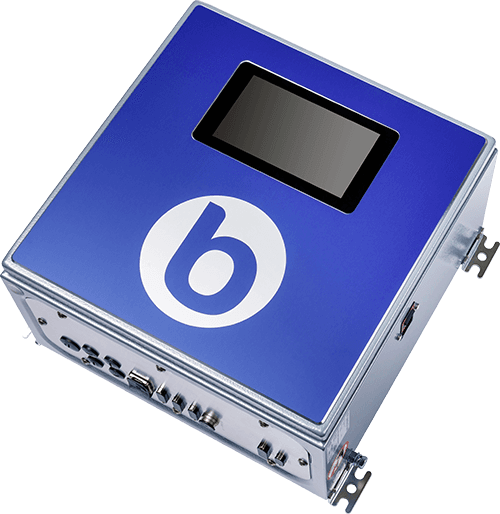
Inline Moisture Meter for Construction Structural Timber & Engineered Wood
FMI-series
The FMI-5 inline moisture meter system is a 100% new development with the latest microprocessor and sensor technology.

Structural timber production — glulam, CLT, finger-jointed timber, and laminated structural products — operates under moisture content requirements that are not optional. EN 14080, EN 14081, EN 15497, and EN 16351 define the moisture limits that determine whether a product can carry a structural certification. Those limits exist because moisture content at the time of bonding or pressing directly affects joint performance, dimensional stability under load, and long-term structural integrity. Getting it wrong has consequences that extend well beyond the production floor.
Most structural timber producers have moisture measurement in place. The gap is not measurement in principle — it is measurement quality: whether the data is objective, reproducible across shifts and operators, and traceable in the format that certification bodies, clients, and technical reviewers expect when questions arise. A handheld reading taken at shift change is a data point. A calibrated inline measurement record for every piece through the press is process control. Only the latter can support production decisions under certification conditions.
Moisture Measurement
Moisture results
Moisture measurement functions
Moisture Sorting Functions
Product settings
Brookhuis Core
PC software
CaliBrook – Calibration service
Other specifications
Structural timber production — glulam, CLT, finger-jointed timber, and laminated structural products — operates under moisture content requirements that are not optional. EN 14080, EN 14081, EN 15497, and EN 16351 define the moisture limits that determine whether a product can carry a structural certification. Those limits exist because moisture content at the time of bonding or pressing directly affects joint performance, dimensional stability under load, and long-term structural integrity. Getting it wrong has consequences that extend well beyond the production floor.
Most structural timber producers have moisture measurement in place. The gap is not measurement in principle — it is measurement quality: whether the data is objective, reproducible across shifts and operators, and traceable in the format that certification bodies, clients, and technical reviewers expect when questions arise. A handheld reading taken at shift change is a data point. A calibrated inline measurement record for every piece through the press is process control. Only the latter can support production decisions under certification conditions.
Moisture Measurement
Moisture results
Moisture measurement functions
Moisture Sorting Functions
Product settings
Brookhuis Core
PC software
CaliBrook – Calibration service
Other specifications
Solutions


Solutions
Solutions