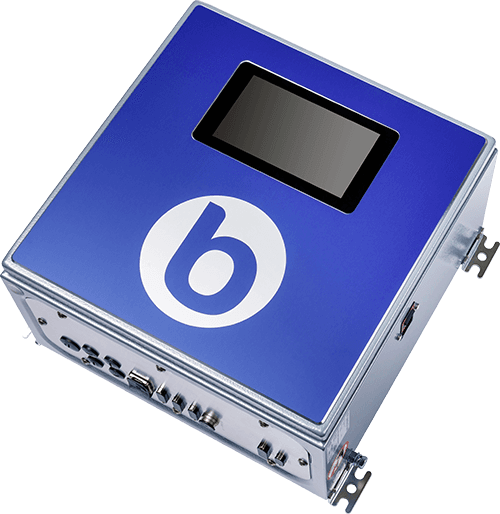
Inline Moisture Meter for Hardwood & Flooring Production
FMI-series
The FMI-5 inline moisture meter system is a 100% new development with the latest microprocessor and sensor technology.

Flooring is one of the most moisture-sensitive end markets in the wood products industry — not because production is technically complex, but because the consequences of incorrect moisture content at dispatch don't appear in the factory. They appear on a client's floor, weeks or months after installation, when boards begin to gap, cup, buckle, or creak under load. By that point, the conversation has moved from production quality to warranty liability, and the producer is left defending a position with no objective measurement record to rely on.
The underlying problem is structural — and typically not visible at the point of production. Most flooring manufacturers and distributors still base moisture control on handheld spot-checks — a representative sample per batch, logged manually, with coverage that depends on who is measuring and when. That approach is adequate when timber is consistent and conditions are stable. It becomes unreliable as soon as variability increases — which is exactly when control is needed most. It fails at precisely the moments when it matters most: variable incoming timber, kiln schedule changes, seasonal shifts in ambient moisture, or a production run where one section of material dried unevenly. Those are the batches that generate claims.
Moisture Measurement
Moisture results
Moisture measurement functions
Moisture Sorting Functions
Product settings
Brookhuis Core
PC software
CaliBrook – Calibration service
Other specifications
Flooring is one of the most moisture-sensitive end markets in the wood products industry — not because production is technically complex, but because the consequences of incorrect moisture content at dispatch don't appear in the factory. They appear on a client's floor, weeks or months after installation, when boards begin to gap, cup, buckle, or creak under load. By that point, the conversation has moved from production quality to warranty liability, and the producer is left defending a position with no objective measurement record to rely on.
The underlying problem is structural — and typically not visible at the point of production. Most flooring manufacturers and distributors still base moisture control on handheld spot-checks — a representative sample per batch, logged manually, with coverage that depends on who is measuring and when. That approach is adequate when timber is consistent and conditions are stable. It becomes unreliable as soon as variability increases — which is exactly when control is needed most. It fails at precisely the moments when it matters most: variable incoming timber, kiln schedule changes, seasonal shifts in ambient moisture, or a production run where one section of material dried unevenly. Those are the batches that generate claims.
Moisture Measurement
Moisture results
Moisture measurement functions
Moisture Sorting Functions
Product settings
Brookhuis Core
PC software
CaliBrook – Calibration service
Other specifications
Solutions


Solutions
Solutions