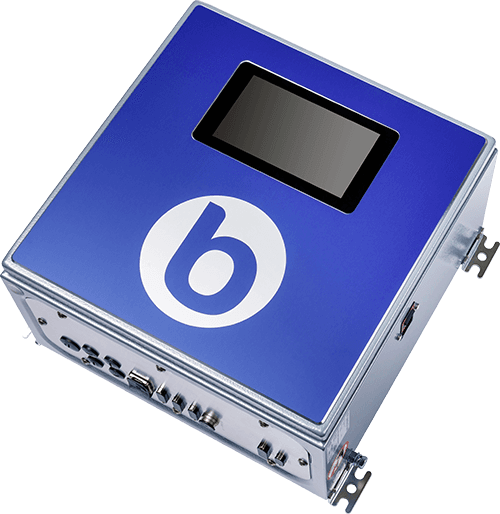
Inline Moisture Meter for Furniture Manufacturing
FMI-series
The FMI-5 inline moisture meter system is a 100% new development with the latest microprocessor and sensor technology.

In furniture manufacturing, moisture content rarely appears on the production agenda until it causes a visible problem — and by then, the cost has already been incurred. A cabinet door that has begun to bind, a tabletop with a bow that wasn't there in final inspection, a drawer front that no longer sits flush — these are the familiar consequences of timber that entered the process outside its moisture content (MC) target, or dried unevenly before it left. By the time the defect is visible, the rework cost and the internal disagreement between production, procurement, and quality, often without a shared measurement reference, have already begun.
The measurement approach in most furniture operations reflects the weight the issue receives in practice: a handful of spot-checks per incoming batch, a target range that everyone broadly understands, and a tolerance for variation that only becomes intolerable when it generates an actual complaint. That approach works well enough with consistent timber from a stable supplier under stable conditions. When any of those factors shifts — a new species, a different drying source, a seasonal humidity change in the production hall — the gap between the nominal MC target and the actual material condition goes undetected until it shows up as a quality defect.
Moisture Measurement
Moisture results
Moisture measurement functions
Moisture Sorting Functions
Product settings
Brookhuis Core
PC software
CaliBrook – Calibration service
Other specifications
In furniture manufacturing, moisture content rarely appears on the production agenda until it causes a visible problem — and by then, the cost has already been incurred. A cabinet door that has begun to bind, a tabletop with a bow that wasn't there in final inspection, a drawer front that no longer sits flush — these are the familiar consequences of timber that entered the process outside its moisture content (MC) target, or dried unevenly before it left. By the time the defect is visible, the rework cost and the internal disagreement between production, procurement, and quality, often without a shared measurement reference, have already begun.
The measurement approach in most furniture operations reflects the weight the issue receives in practice: a handful of spot-checks per incoming batch, a target range that everyone broadly understands, and a tolerance for variation that only becomes intolerable when it generates an actual complaint. That approach works well enough with consistent timber from a stable supplier under stable conditions. When any of those factors shifts — a new species, a different drying source, a seasonal humidity change in the production hall — the gap between the nominal MC target and the actual material condition goes undetected until it shows up as a quality defect.
Moisture Measurement
Moisture results
Moisture measurement functions
Moisture Sorting Functions
Product settings
Brookhuis Core
PC software
CaliBrook – Calibration service
Other specifications
Solutions


Solutions
Solutions